
Dimity Powell’s Five Dos and Don’ts for Children’s Authors
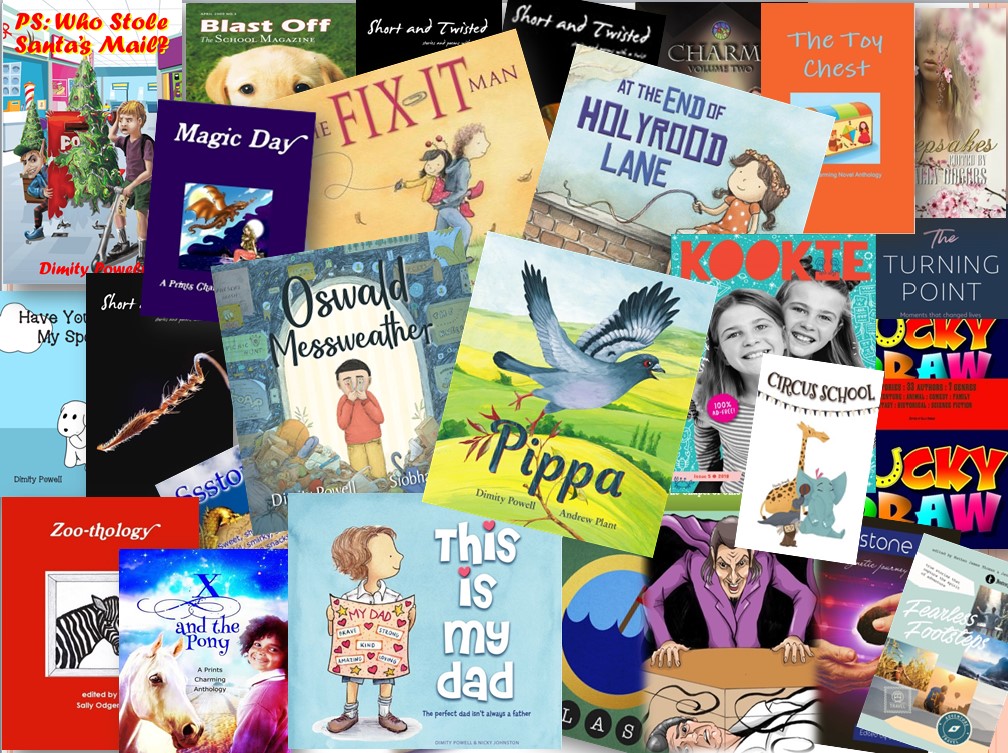
If you want to know how to succeed as a children’s author, ask someone who has already done it! Award winning children’s author, Dimity Powell writes and reviews exclusively for children with over 30 published stories and digital narratives and is the Managing Editor for Kids’ Book Review. She believes picture books are life essentials, like ice cream; to be enjoyed at least once a day. Her own include: Pippa and The Troublesome Twins (2023), This is My Dad (2022), Oswald Messweather (2021), Pippa (2019), the SCBWI Crystal Kite award-winning At the End of Holyrood Lane (2018) and the critically acclaimed, The Fix-It Man (2017), with more on the way! Several of her titles have been published in simplified Chinese, Polish, Spanish and Slovenian. She believes in the transformative power of reading and storytelling yet still can’t surf despite living on the Gold Coast, Australia. Over to Dimity!
Ahoy hoy! A greeting which as any self-respecting wordsmith would know means, hello! But you might not. Even after years and years of full submersion into what is fondly termed the Kids’ Lit industry, there is always – always – more to learn. Or rather, discover. Daily discovery is, hands down, the best part of my role as a children’s writer. Passing that knowledge on is a satisfying second.
So, here are my Top 5 Dos and Don’t for creating funky, fun, full of meaning, illustrative fiction. They are by no means comprehensive, however will help instil the stalwart stoicism that should be your cornerstone for reaching publication.
Top 5 Dos:
- Read. Sounds silly but I’ve met dozens of would-be picture book writers who have not read a picture since they were six but are determined to write one. They never visit the kids’ section in a library, they never read to youngsters, they never get involved with picture books. To truly understand a thing: a country, a cuisine, a picture book, one must fully commitment oneself to it. The easiest way for burgeoning authors to do this is simply to read. Read picture books to yourself and aloud. You’ll be surprised what you will learn about what’s hot and what’s not, what works, the intricacies of visual narrative and the magic of musicality simply by absorbing as many styles of picture books as you can lay your hands on.
- Write. Time to practise everything you’ve soaked up through osmosis. Don’t copy what has inspired or influenced you rather let it fill your heart and soul. Close your eyes and feel your own tale. Write it down. I guarantee the first, second, even sixth attempt may be cringe-worthy. It doesn’t matter. Listen. Refine. Try again. Make those tales that matter to you your own. This is called developing your own voice. Voice is powerful, individual and should be present in everything you create. Only writing and rewriting and exploring styles and language will enhance your writer’s voice.
- Learn. OK, so far, the advice seems pretty prosaic but think about it. An ace tennis player may have a great eye for the ball but without constant practise, guidance and correction, they’re never going to make it Wimbledon. Writing is no different. You may have a way with words and a story to tell, but like baking a multi-tiered cake, unless you follow the recipe, your results may be mediocre at best. Take time to understand the ingredients, the fundamentals of crafting a good story so that you have the best chance of creating something special. It’s why you’re here now. It’s why you should be attending as many writing workshops, festivals, conferences, even book launches as you can muster. Every new bit of knowledge acquired is another key element in your mixing bowl of creative experience and understanding. This includes developing a fine appreciation for visual narrative and its role in illustrated fiction. Without this understanding, you as the author are only half the engine that is needed to make a picture book run effectively. In other words, sit in on illustrating workshops (if you are an author and vice versa). You will write more intuitively and intelligently when you better appreciate the responsibilities, constraints and rationale employed by illustrators.
- Party crash. Remember as a kid how you used to fantasize about your perfect wedding or attending an awards ceremony, or being promoted to the head of magnificence? Ahem, well I did. Point is, it doesn’t hurt to manifest a little positivity. The kids’ lit industry is vast. It is competitive. It is full of downward spirals and disappointments, setbacks and rejections. But none of this has anything to do with you if you can visualise the end game. For me that goal was to one day see a picture book with my name on the cover (that wasn’t written by Bob Graham^) on my daughter’s book shelf. Simple but sustaining. Find your goal and stick to it. Meantime, start planning: for that dream
weddingbook launch of your first picture book publication. I was matching book themes to swag and merch and drafting speeches long before signing my first contract. To fine tune my planning, I attended as many kids’ book launches as my budget would allow. This fulfills several desires: you get to meet your book heroes; you get to meet like-minded others and build your ‘tribe’; you glean priceless titbits about writing, the road to publication, the industry and the provenance of stories. In short, you see firsthand how others ‘do it’. Remember, it’s important to be gracious and humble to every one you encounter on your way up the ladder because you never know who you might need to catch you on the way down. - Do something. Never be afraid to ask. To enter competitions. To pitch an idea. To take risks. To live life. How does this help you hone your picture book writing skills? Simple. Picture books are effectively War and Peace in 32 (or less) consecutive pages. There is no room for preamble or random exposition. So, it’s important to understand your character, what they really want and what really makes them tick. Emotions. By distilling your own emotive reactions and experiences into their story you create empathy that connects them with the reader. It’s less about writing what you know and more about writing what you feel. Curiosity, keen observation and the ability to relay emotion effectively is key in any narrative, but especially so in picture book narratives that demand economy of text. And the only way to foster this appreciation of life is to do life!
Top 5 Don’ts:
- Never give up. Ever. Everyone’s path to success is different. My picture book publication journey was a series of mountain and valley hikes accumulating in a final colossal trek up Mt Everest, where at its pinnacle, awaited my first picture book contract. Finally, the result of years of effort was within reach when, without warning, it was recalled. I could have crumpled under the despair, fallen back to the beginning. Instead, I remained steadfast to my convictions and appealed the decision. The rest, as they say, is history. Be true to yourself. Back your convictions and give everything your best shot. This is different from begging or persisting annoyingly. Convictions must be backed with reason and logic and good sense. Just never lose sight of them no matter how steep the climb. Oh, and while you’re waiting for that reconsideration, write another story. Then another and another.
- Leave precious at the door. OK, so on the one hand you need to believe in your story and self absolutely however as with all things, balance is paramount. It helps to accept that publishing is a business just like running a day spa. Free massages are great but won’t pay for the aromatherapy oils. Publishing is no different, albeit perhaps less fragrant. Appreciating the balance between integrity and saleability will help you let go of the need to be in total control of your word babies. Trust me, whoever takes on your story knows the best way to sell it. That’s their business. Having faith in the process will allow you to enjoy it far more.
- Forget trends. Publishing calendars work further into the future than a crystal ball. A contract of work may not result in a printed picture book for two years or more. What is popular now might have faded into a twilight of exhausted unicorns and overworked witches by then. However, that’s not to say the sun won’t rise again on topics deemed ‘outdated’ and ‘overdone’. The beauty of being a kids’ author is that your target audience is forever renewing itself. So, if you feel that your story about over-worrying kids has been done to death, write it anyway. It’s not what you tell, it’s how you tell it. Make any story, even the unicorn ones, uniquely yours.
- Never assume. Anything: overnight success, your entitlements, your abilities. I was accosted once by a lady who lamented about my publishing achievements. She’d been writing for a few months with no submission success. She proclaimed it was unfair, that I was ‘lucky to have had so many stories’ published. I quietly reminded her that luck had little to do with and to paraphrase the great Robin Williams, it took me over ten years to be an overnight success. Your storytelling muscle will evolve and increase the more you flex and use it. For me, this process is part of the joy of writing, part of my ongoing apprenticeship. Be gracious and professional about this at all times. Unless you only ever intend to write one story, don’t assume the first thing you write is your magnum opus and the world owes it to you to share it unreservedly.
- Leave your tower. Granted, it’s a lovely tower with solid WIFI and abundant light but the trouble with comfort zones is that they never challenge. Cherish them but don’t forget to step out of them now and then. Explore new writing ventures, formats, platforms and embrace new directions. For instance, I’m pretty mediocre at endings. I also struggle with technology but I appreciate that five-year-olds are proficient at screen swiping and twelve-year-olds are still up for a bit of adventure so I embarked on a project to create a multi-ending, choose your own adventure, locative … digital narrative. It was a success and was even shortlisted for a state award. It also added valuable diversity to my publication list. More than that, it was liberating and fun to write.
Although centred around ‘starting out’, today’s Top 5s are worth remembering no matter what stage of your writing career. Read lots, write more. Listen and learn. Adapt. Write from the heart. Be daring and brave and never ever say never. Most important of all, have fun! Stay tuned for more Top 5s addressing the nuts and bolts of picture book creation coming soon.
^Dimity Dumpty by Bob Graham ISBN: 9781844280674 Walker Books 2006